This post may contain affiliate links. If you make a purchase through these links, I may earn a commission at no additional cost to you. Learn more about our affiliate policy.
There was a point when Pinterest started to feel heavier than helpful for me. Not because it demanded too much, but because I was carrying too many unanswered questions while using it.
Was I choosing the right topics?
Were my pin titles clear enough?
Did board names actually matter?
And how much of this needed to be done consistently for it to work?
I needed a calmer way to understand how Pinterest actually supports blog traffic, and how to work with it without turning it into a daily obligation.
Pinterest can be a steady, supportive traffic source when it is treated as a system rather than something you perform inside. This post will walk you through how to use Pinterest in a way that feels clear, sustainable, and respectful of your energy.
Why Pinterest Works Differently Than Other Platforms
Pinterest is often grouped in with social media, but it functions very differently.
People do not come to Pinterest to keep up with others. They come to search. To plan. To solve problems and gather ideas they intend to return to.
This difference is foundational. Before you ever create a pin, it helps to understand how Pinterest actually behaves behind the scenes and what it responds to over time. When that orientation is missing, the platform can feel unpredictable.
Pins have a long lifespan. They can resurface weeks, months, or even years after they are published. Pinterest also does not rely on real-time interaction. There is no expectation of daily posting, engagement, or visibility maintenance.
This makes Pinterest especially supportive for bloggers who want their work to circulate quietly without constant attention.
In practice, Pinterest works well because it offers:
- Search-led discovery rather than algorithmic performance
- Long-term visibility instead of short-lived reach
- Traffic that builds cumulatively over time
- Minimal interaction requirements
When approached with clarity, Pinterest becomes less about staying visible and more about placing your work where it can be found.
If this slower, search-led model resonates, you may also appreciate how the same principles apply in content creation in how to practice slow blogging in a fast internet culture.
Start by Designing a Strategy That Fits Your Capacity

Most Pinterest overwhelm does not come from the platform itself. It comes from trying to follow systems that were never designed to be lived with.
A sustainable Pinterest strategy begins with an honest look at your capacity. How often you can realistically create pins. How much mental energy you want to give this channel. What rhythm feels supportive rather than draining.
You do not need to post every day. You do not need endless pin variations. You do not need to chase trends.
What matters most is that your approach is repeatable.
Pinterest rewards consistency over intensity. A small, steady rhythm will serve you far better than periods of heavy effort followed by long breaks.
Focus on a Small Set of Strong Blog Posts First
Instead of pinning everything you have written, begin with a short, intentional list.
Choose three to five blog posts that clearly reflect your work and offer real usefulness. These might be posts that answer common questions, solve specific problems, or provide guidance your reader is actively searching for.
If choosing which posts to prioritize feels unclear, this guide on how to choose blog post topics that actually fit your life can help you narrow your focus without forcing momentum.
Evergreen content works especially well here. Content that stays relevant over time allows your pins to build momentum quietly.
This approach helps in two ways:
- It reduces decision fatigue
- It concentrates your energy where it has the most impact
If Pinterest still feels abstract at this stage, it often helps to ground yourself in a few core principles about how pins, boards, and content work together before adding complexity.
Use Keywords as Orientation, Not Pressure
Because Pinterest is a search platform, keywords matter. But they do not need to become another source of stress.
Think of keywords as signals. They show you how people describe what they are already looking for.
You can gather this information simply by paying attention to the platform itself:
- Typing topics into the Pinterest search bar and noting suggested phrases
- Checking Pinterest Trends to observe seasonal interest
- Noticing repeated language on well-performing pins in your niche
These early SEO steps do not need to be perfect. Small, consistent alignment between your content, your pins, and the words people use to search goes a long way over time.
The goal is not optimization for its own sake. It is clarity.
Using PinClicks to Bring Clarity to Pinterest
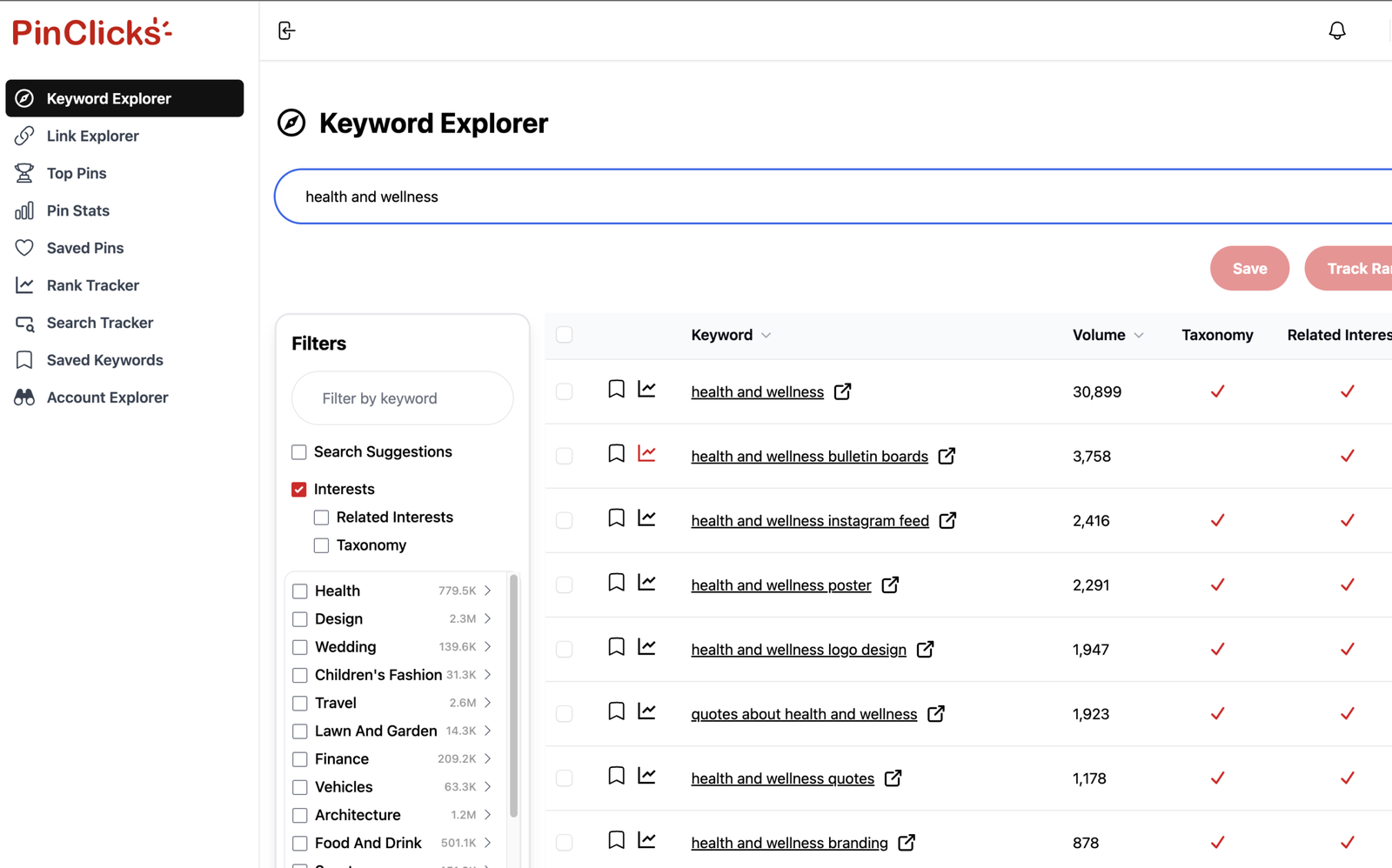
One of the parts of Pinterest that used to slow me down was the uncertainty. Wondering whether a topic was actually being searched for, or whether I was guessing based on what looked popular.
PinClicks helped settle that.
It shows what people are genuinely searching for on Pinterest using real platform data. Instead of trying to intuit the system, I could see which phrases had traction and which ones were already crowded.
That clarity shows up in very practical ways:
- Pin titles feel easier to write because the language is already there
- Board names stop feeling arbitrary and start working with search
- Blog topics feel more grounded in real demand
- Time spent second-guessing or reworking pins drops noticeably
What I appreciate most is that it supports decision-making without overriding judgment. Creativity still leads. The tool simply offers orientation, so your energy goes into creating rather than circling.
If you value clarity and want a more grounded way to align your content, pins, and boards with how people actually search, PinClicks can make the process feel lighter and more coherent.
Keep Pin Design Simple and Calm
Pinterest is visual, but success does not require elaborate graphics.
Clear, minimal pins often perform better because they communicate one idea quickly. A single promise. A clear outcome.
When designing pins, focus on:
- Large, easily readable text
- Neutral or softly styled backgrounds
- One clear message per pin
- Consistent visual language across designs
Over time, this consistency helps Pinterest understand your content more clearly and helps readers recognize your work without effort.
Choose a Pinning Rhythm You Can Sustain

There is no single correct posting schedule. What matters is choosing a rhythm that fits your life.
Some bloggers prefer to batch pins once a month. Others work in short weekly sessions. Some create pins only when new posts are published.
All of these approaches can work.
Pinterest responds to steadiness. Choose a rhythm you can maintain without friction, and let that be enough.
If it helps to have something concrete to return to, this is a simple way many bloggers work with Pinterest without creating pressure.
- Start with three to five strong, evergreen blog posts
- Create a small number of clear pins for each post and let them circulate over time
- Revisit your keywords every few months to stay aligned with how people are searching
What Pinterest Growth Actually Feels Like
Pinterest growth is cumulative. Often slow at first.
Pins take time to circulate. They are indexed, tested, and gradually reintroduced to search results. Early slowness does not mean something is wrong.
What often appears first is alignment. The readers who arrive through Pinterest are usually searching with intention. They are looking for exactly what you offer.
Over time, those small streams compound. Traffic becomes steadier. Your content continues working even when you are focused elsewhere.
This is the strength of a system built for patience.
Closing Perspective
Pinterest does not need to be another place where you push yourself past capacity.
Used thoughtfully, it becomes a quiet partner. A way to place your work where it can be discovered, then return your attention to the rest of your life.
You are allowed to grow traffic without urgency. You are allowed to choose systems that support you rather than consume you.
Clarity, consistency, and restraint are powerful here. Pinterest responds well to all three.

Ready to build a profitable blog?
The Dream Blog Starter Vault is the complete, step-by-step path to a blog that earns passive income while you live your life.
Open the Vault